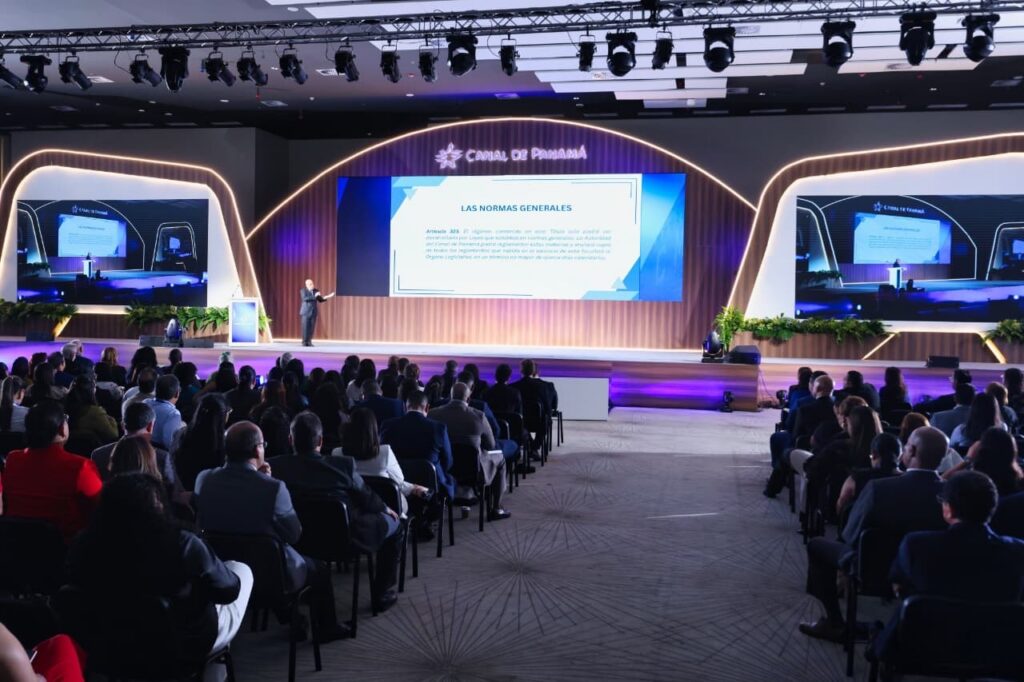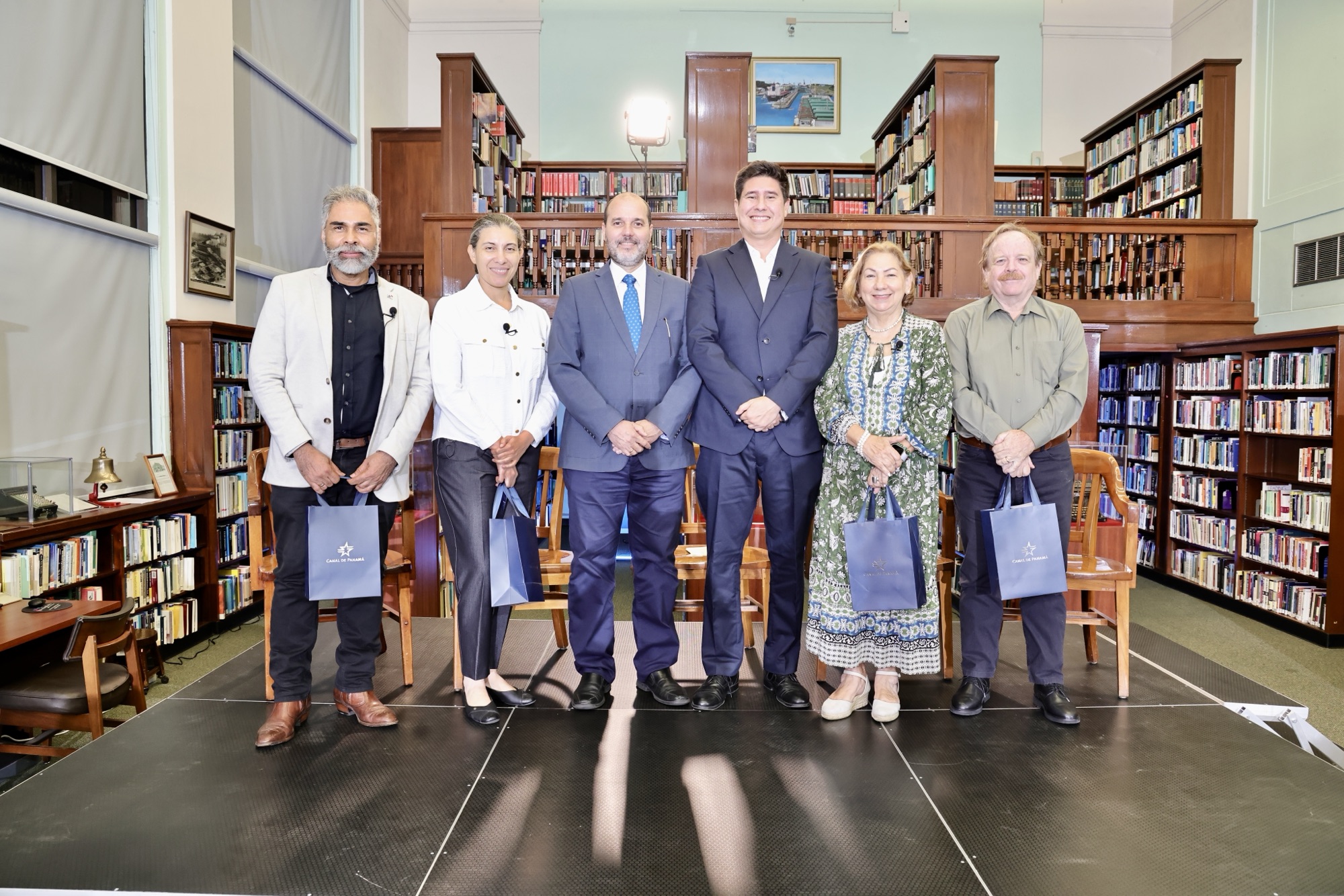
The Panama Canal concluded the International Canal Law Congress on May 29th, an academic and institutional forum of international scope, designed to analyze and promote understanding of the legal framework governing the operation of the interoceanic waterway. Over two days, the event brought together jurists, academics, officials, and national and international specialists for a technical exchange focused on the Neutrality Treaty, the Constitutional Title, the Organic Law of the Panama Canal, and other components of the canal’s legal framework.
In his remarks, the Panama Canal Administrator Dr. Ricaurte Vásquez Morales, emphasized the historical significance of Panama, its geographic position, and the canal as a cornerstone of national stability. “The existential purpose of the Panama Canal and this geographic position is to generate benefits; to bring them from abroad and make them better in Panama,” he said. “These benefits must be distributed to as many people as possible.”
Deputy Administrator and Chief Sustainability Officer Ilya Espino de Marotta addressed the Water for the Future project in her presentation, highlighting the strategic importance and social benefits of the Río Indio Lake project.
From an international legal perspective, arbitration attorney Andrés Jana examined international investment law in relation to the Panama Canal’s special legal regime. Dr. Eloy Alfaro presented information about the Panama Canal’s Constitutional Title and drew on his experience with the negotiation process, while Dr. Adolfo Ahumada offered reflections tied to the negotiation of the Torrijos-Carter Treaties. Rigoberto González Montenegro rounded out the session with an examination of the Constitutional Title within the broader context of Panamanian constitutional law.
Attorney Franklin Bell addressed the institutional structure underpinning the canal’s operations, highlighting the strength of the organization’s legal and administrative framework and its capacity to adapt to new realities and operational demands.
The congress also featured an expert panel on the legal foundations of the Panama Canal’s labor regime, with the participation of Jorge Federico Lee, Ramón Salazar, and Rolando Murgas Torrazza, moderated by Vielka Duarte. The panel examined the application of the institution’s special labor regime, its legal basis, and key elements of interpretation and practice within the canal’s management model.
Both days of the congress were oriented toward generating material for the analysis, dissemination, and understanding of Panama Canal Law, given its institutional, national, and international significance. Through this initiative, the Panama Canal fostered specialized dialogue around the principles and norms that sustain the neutral, efficient, and secure operation of the interoceanic waterway.